
Let’s be honest: plant fertilizer can get pricey. Between the fancy bottles, the confusing labels, and the ingredient lists you need a chemistry degree to read, feeding your plants can feel like more hassle than it’s worth.
But what if one of the best plant snacks was already sitting on your kitchen counter? If you eat bananas, you’re tossing out free fertilizer every single day. With a jar, some water, and a little patience, those peels can give your plants a natural nutrient boost. Here are three easy ways to do it.
Why Banana Peels Are a Gardener’s Secret Weapon
Banana peels are packed with potassium, a nutrient that helps plants flower, set fruit, and stand up to stress like heat and drought. They also contain smaller amounts of calcium, magnesium, and phosphorus, which support strong cell walls, healthy green leaves, and root development.
One thing to know upfront: banana peels contain very little nitrogen, the nutrient that drives leafy growth. So think of banana fertilizer as a helpful supplement, not a complete replacement for compost or a balanced fertilizer. Used that way, it’s a fantastic, low-cost boost. And as a bonus, you’re keeping food scraps out of the trash.
What You’ll Need
The good news is that you probably have everything already:
- Banana peels (organic if possible, since they carry less pesticide residue)
- A large glass jar or container with a lid
- Water (tap water left out overnight, rainwater, or filtered water)
- A knife or kitchen scissors
- A strainer or cheesecloth
- A baking sheet and a blender or coffee grinder (for Method 3 only)
Method 1: Banana Peel Water (The Easiest Option)
This is the simplest method and the perfect place to start.
How to make it:
- Chop 2 to 3 banana peels into small pieces. More surface area means more nutrients leach into the water.
- Drop the pieces into your jar and cover them with about 4 cups of water.
- Put the lid on and let it soak for 2 to 3 days at room temperature.
- Strain out the peels and toss them in your compost or bury them in the garden.
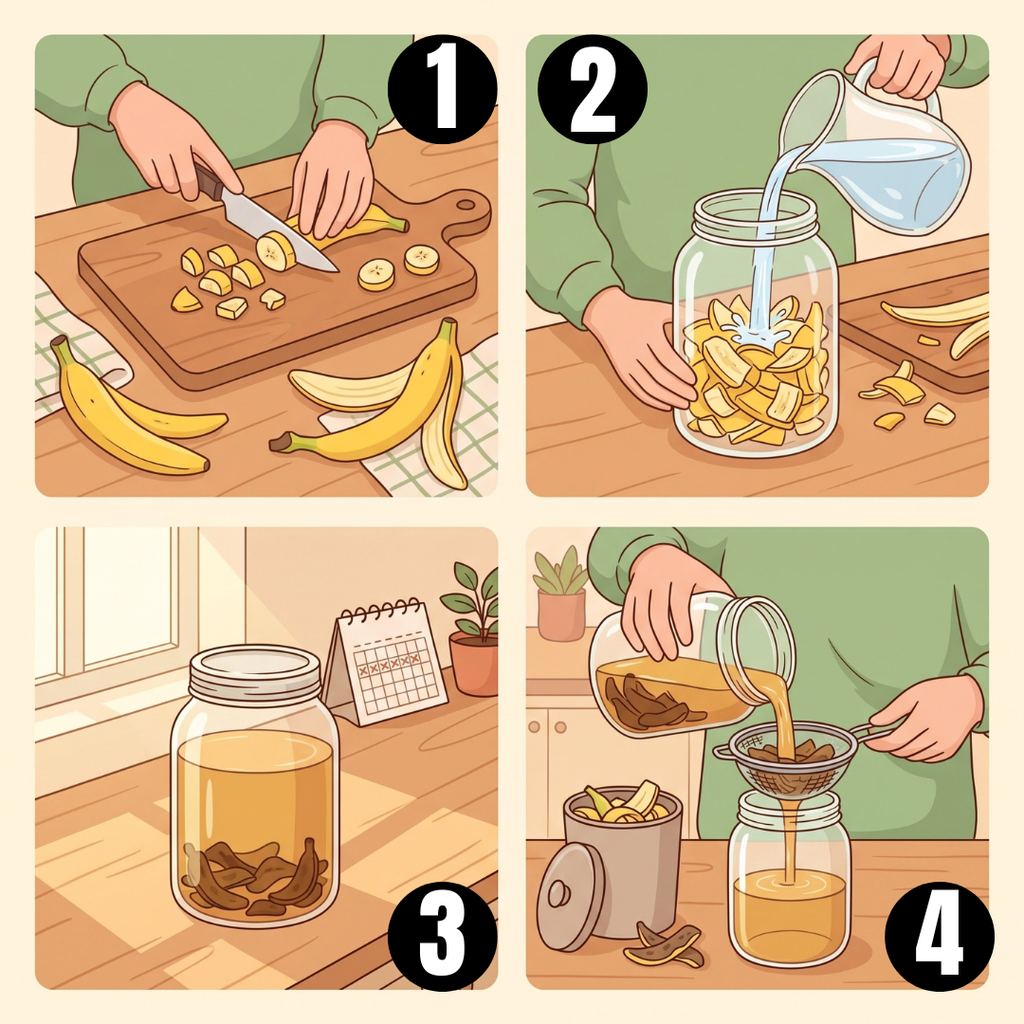
How to use it: Dilute the banana water with plain water at a ratio of about 1 part banana water to 2 parts water, then pour it directly onto the soil around the base of your plants. Try to avoid splashing the leaves.
Plants that love it: Flowering houseplants like peace lilies and African violets, plus leafy favorites like pothos and philodendrons. It’s gentle enough for almost anything in a pot.
Method 2: Fermented Banana Peel Tea
If you want a stronger brew, fermentation takes things up a notch. The longer soak and helpful microbes break the peels down further, releasing more nutrients.
How to make it:
- Chop 3 to 4 peels and place them in your jar.
- Cover with about 4 cups of water and add a teaspoon of sugar or molasses to feed the good bacteria.
- Cover loosely (fermentation creates gas, so don’t seal it tight) and let it sit for 1 to 2 weeks, stirring every couple of days.
- When it smells pleasantly sour, like mild vinegar, strain it.
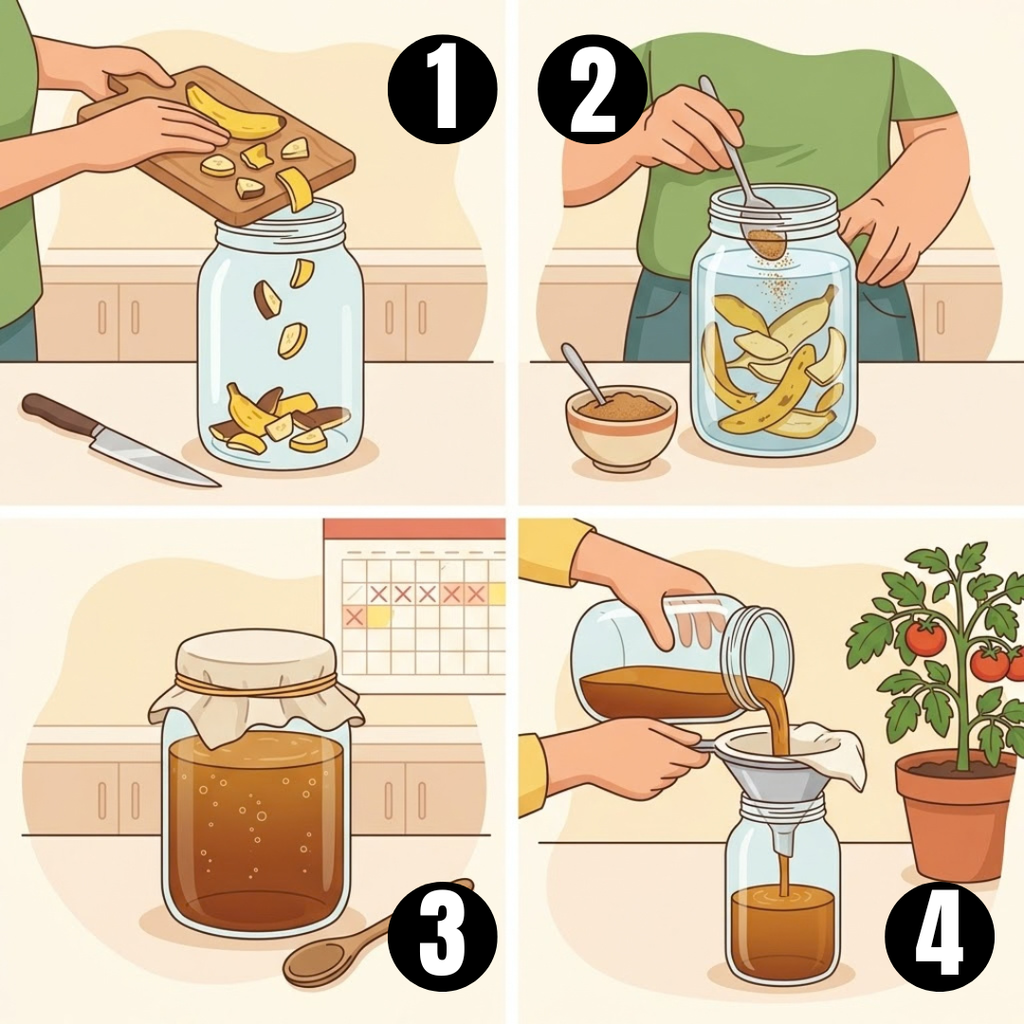
How to use it: This brew is concentrated, so dilute it well, about 1 part tea to 5 parts water. Apply it to the soil, not the leaves.
Plants that love it: Fruit- and flower-producing plants such as tomatoes, peppers, roses, and squash, which crave potassium when they’re blooming and setting fruit.
Method 3: Dried Banana Peel Powder
Don’t want jars sitting on your counter? Banana powder is shelf-stable and easy to store for months.
How to make it:
- Lay peels flat on a baking sheet lined with parchment paper.
- Dry them in the oven at a low temperature, around 200°F (95°C), for 2 to 3 hours until they’re dark and brittle. You can also sun-dry them over several days.
- Let them cool, then blend or grind them into a coarse powder.
- Store in an airtight jar.
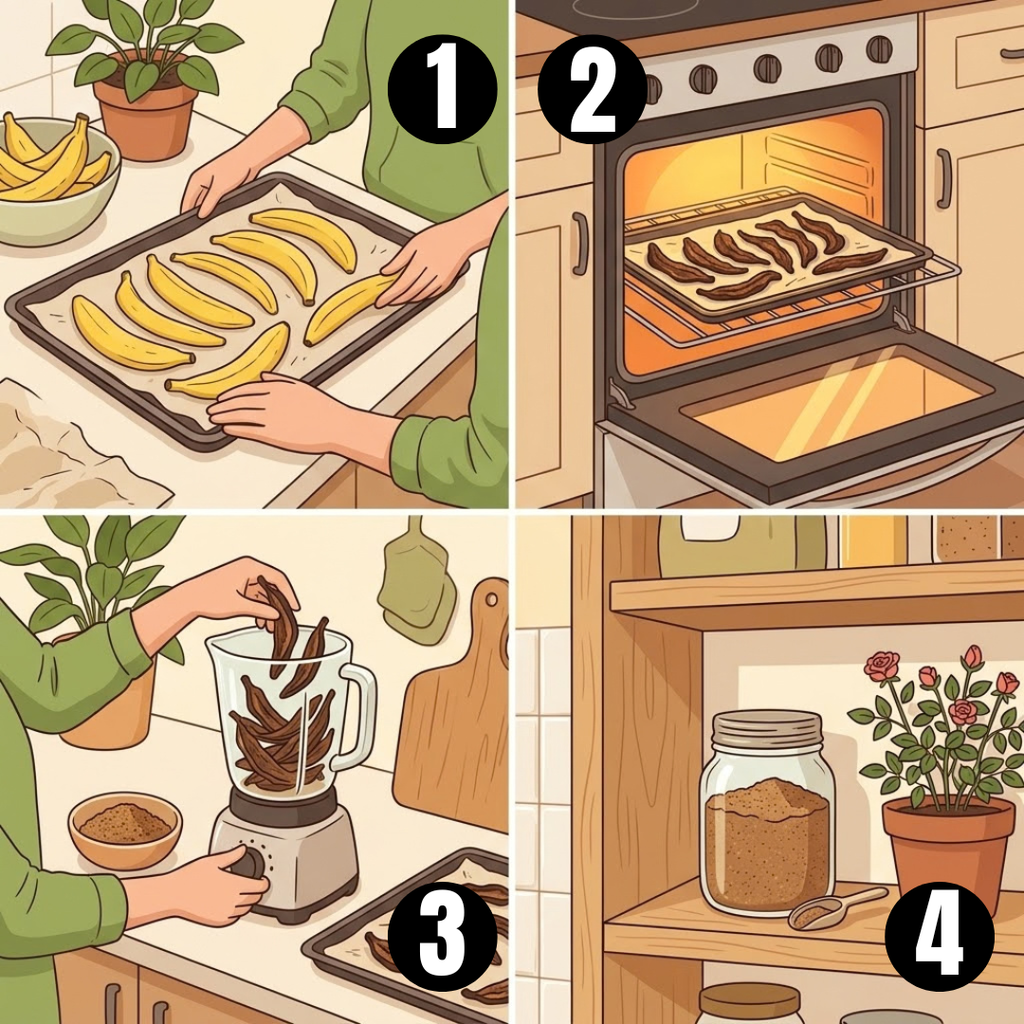
How to use it: Sprinkle about a tablespoon around the base of each plant and gently scratch it into the top layer of soil, or mix it into potting soil when repotting. Because it breaks down slowly, it feeds plants gradually over time.
Plants that love it: Roses, fruiting plants, and bulbs like tulips and daffodils. It’s also great mixed into the planting hole for new seedlings.
How Often Should You Use Banana Peel Fertilizer?
A little goes a long way. Here’s a good rule of thumb:
- Banana peel water: Every 1 to 2 weeks for outdoor plants during the growing season, and about every 2 to 4 weeks for houseplants.
- Fermented tea: Every 2 to 3 weeks, since it’s stronger.
- Banana powder: Once a month or so, because it releases nutrients slowly.
Ease off in fall and winter, when most plants slow their growth and need less feeding.
Which Method Is Right for You?
- Short on time? Go with banana peel water. It’s quick and nearly foolproof.
- Growing tomatoes or roses? Fermented tea gives heavy feeders a stronger boost.
- Want something low-maintenance? Make a batch of powder and use it all season.
You can also mix and match. Many gardeners keep powder on hand and whip up banana water whenever they have spare peels.
Troubleshooting and FAQs
Why does my banana water smell bad?
A sweet or slightly sour smell is normal. A rotten smell usually means it soaked too long without fermenting properly. Toss it and start fresh, and stick to the recommended soak times.
There’s mold on top. Is it ruined?
A thin white film on fermented tea is usually harmless and can be skimmed off. Fuzzy green, black, or pink mold is a sign to throw the batch out.
How do I keep fruit flies away?
Keep the lid on and store your jar somewhere out of direct sunlight. When burying leftover peels outdoors, bury them a few inches deep.
How long can I store banana water?
Strained banana water keeps for about a week in the fridge. The powder lasts for months in an airtight container.
Can I just bury whole peels next to my plants?
You can, but they break down slowly and may attract pests. Chopping them up first helps them decompose faster.
Give Your Plants a Free Boost
Banana peel fertilizer won’t transform your garden overnight, but it’s an easy, natural way to give your plants extra potassium and minerals while cutting down on waste. Whether you start with a simple jar of banana water or make a batch of powder, you’ll be turning trash into plant food in no time.
So the next time you peel a banana, don’t toss it. Your plants will thank you!
